Self-Therapy Journal: How to Use Voice Notes for Self-Reflection


You bought the Six Minute Journal. Then a gratitude journal. Then a beautiful reflection notebook with prompts on every page. The first three pages are filled in. The rest are blank.
I know the feeling.
It’s not that you don’t care. Writing things down by hand takes time, energy and the right moment — and the right moment almost never comes. The thought you wanted to catch shows up on a walk, in the shower or at 1 a.m., and the notebook is somewhere else.
This guide shows a simpler way: keep your self-therapy journal by voice, in one app that’s always in your pocket.
Why putting your thoughts into words helps
When something bothers you, it often feels bigger in your head than it is. Saying it out loud — or writing it down — gives it a shape.
This isn’t just a feeling. In a well-known UCLA study, people who named their emotions in words showed less activity in the amygdala, the part of the brain linked to stress and fear. Research on expressive writing — writing about thoughts and feelings for a few minutes a day — has also been linked to better mood and well-being.
Self-reflection works best when it’s regular. And the easiest way to make something regular is to make it effortless.
Why voice works better than paper
- It’s always with you. Your phone is in your pocket; your notebook is on the shelf.
- It’s faster. You speak several times faster than you write by hand.
- It’s more honest. When you talk, you don’t edit yourself. You say what’s actually going on.
- It’s all in one place. No more five half-empty notebooks — every reflection lives in one searchable app.
How to keep a self-therapy journal in Letterly

Step 1. Just talk
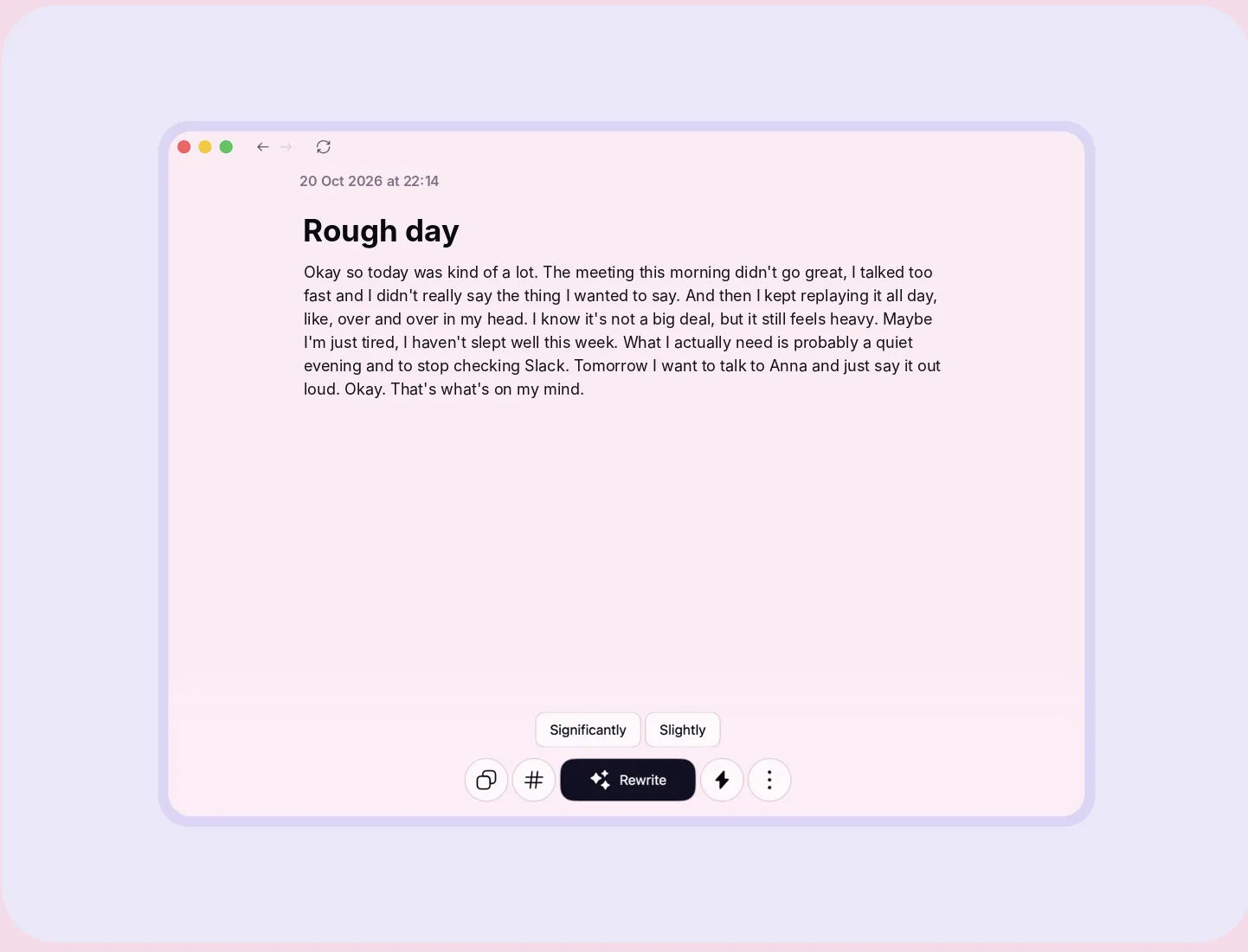
Open Letterly, tap record and say what’s on your mind. No structure, no perfect sentences. Ramble, pause, start again — Letterly turns it into clean text and keeps the audio.
Not sure where to start? Try one of these:
- What’s taking up the most space in my head right now?
- What made me feel good today, and what drained me?
- What am I avoiding, and why?
- What would I tell a friend in my situation?
Step 2. Keep your reflections together with a tag
Create a tag like Reflection, Therapy or Me and add it to these notes. On the notes screen, tap the tag to see only your reflections — like a private journal inside the app.
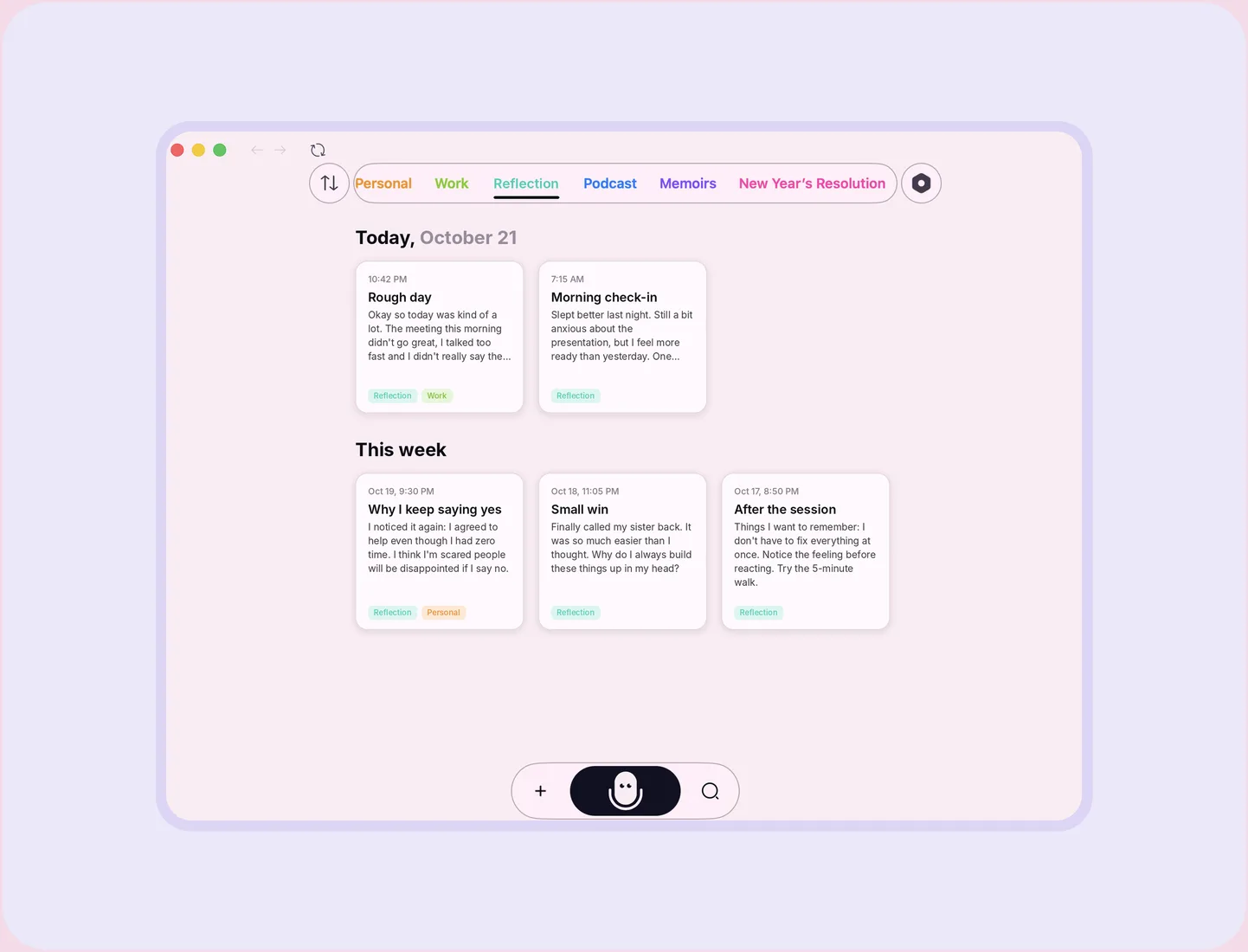
Step 3. Turn it into a journal entry with one tap
A raw voice note is great for getting things out. To read it back later, turn it into something structured with a rewrite option. Letterly has three that fit self-reflection:
Step 4. Create your own self-therapy template
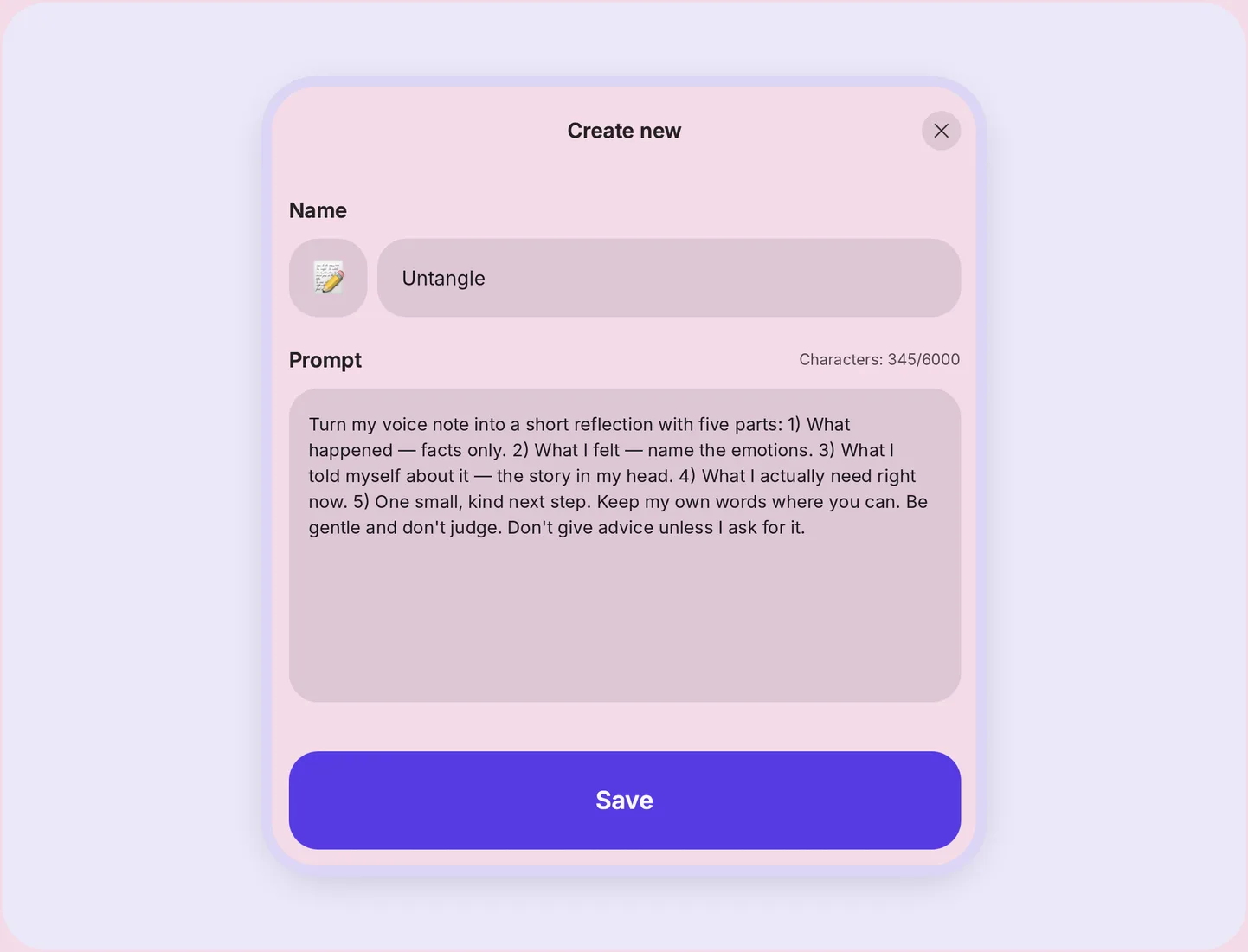
If none of the ready-made options fit, make your own. Here’s one we like — copy it into a custom rewrite option:
And a shorter one for busy days:
Step 5. Look for patterns with Claude
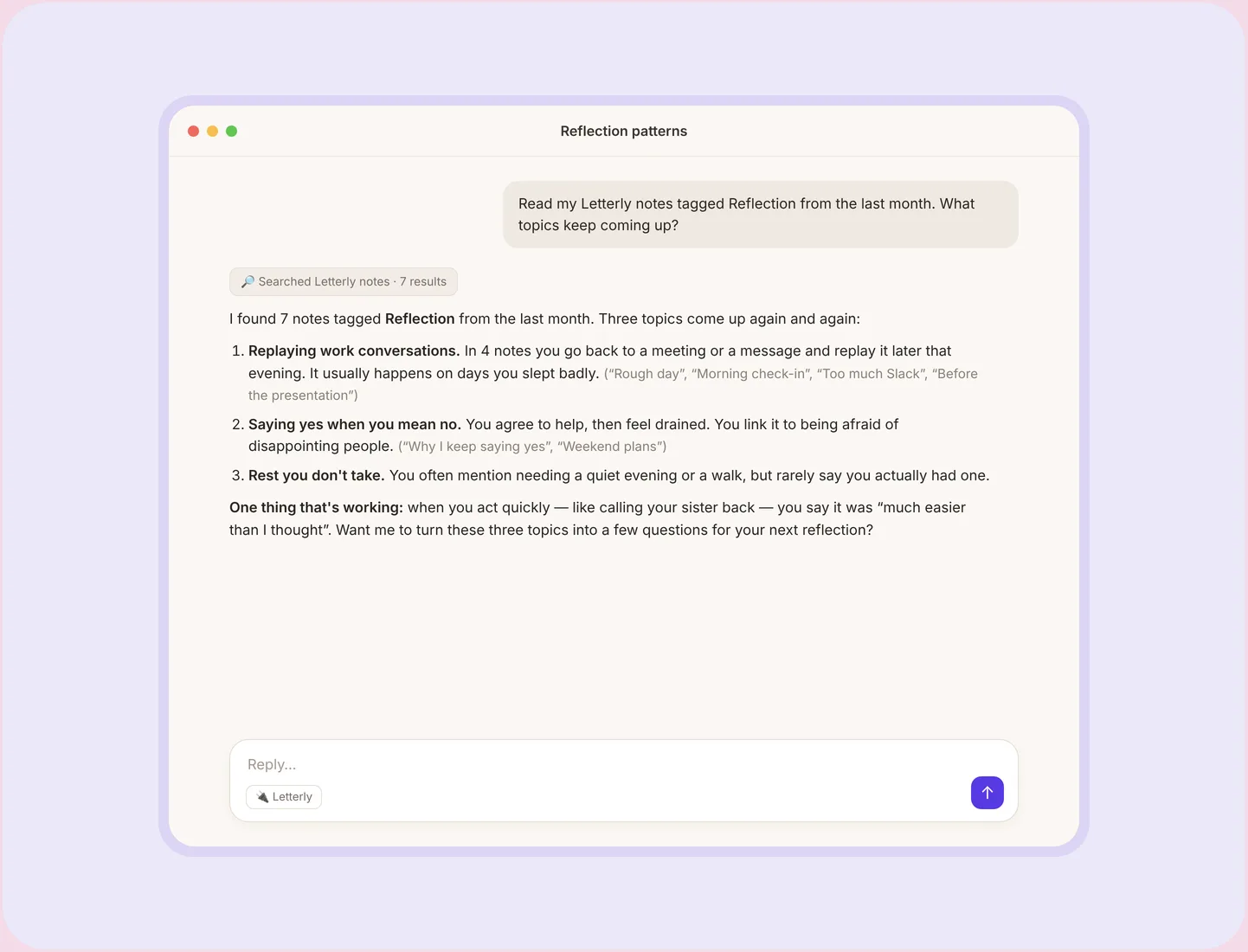
One note shows a moment. A month of notes shows a pattern. Connect Letterly to Claude through MCP, and Claude can read your reflections and help you see what you might miss.
Then try prompts like these:
Spot patterns
- Read my Letterly notes tagged Reflection from the last month. What topics keep coming up?
- When do I sound the most stressed, and what’s usually going on around those days?
Notice what’s working
- Find the moments I felt calm or proud. What did those days have in common?
- What have I already handled well that I tend to forget?
Get unstuck
- I keep coming back to the same worry. Summarize what I’ve said about it, and ask me three questions that could help me see it differently.
Bonus: keep what you learn in therapy
If you see a therapist, the most useful thoughts often fade by the next day. With your therapist’s permission, you can record a session in Letterly and come back to it later — or record a short voice note right after: what you talked about, what surprised you, and what you want to try this week.
Before the next session, ask Claude:
Look at my notes since my last therapy session. What did I want to bring up, and what has changed since then?
You walk in prepared, and nothing important gets lost between sessions.
Tips ✅
- Lower the bar. One minute counts. A messy note is better than a perfect one you never record.
- Pick a moment. After work, on your evening walk, before bed — tie it to something you already do.
- Don’t reread right away. Come back after a week. Distance shows you things the moment hides.
You don’t need another notebook. 🎤 You just need a place where your thoughts can land — whenever they show up.
Got questions? Email us at hi@letterly.app — we’re happy to help.