


Work About Work Is Eating Your Day. Here's How to Reduce It

Have you ever found yourself drowning in unnecessary paperwork or spending hours every week crafting emails for customers?
It’s a common problem now. And a lot of these so-called productivity hacks only make it worse.
You start thinking you need five apps to track projects, a few note-taking apps, and a paper notebook just in case. And eventually, you end up buried in administrative chaos, repeating the same small tasks day after day without making any real progress.
Let’s figure out together how to break this vicious cycle.
What is work about work?
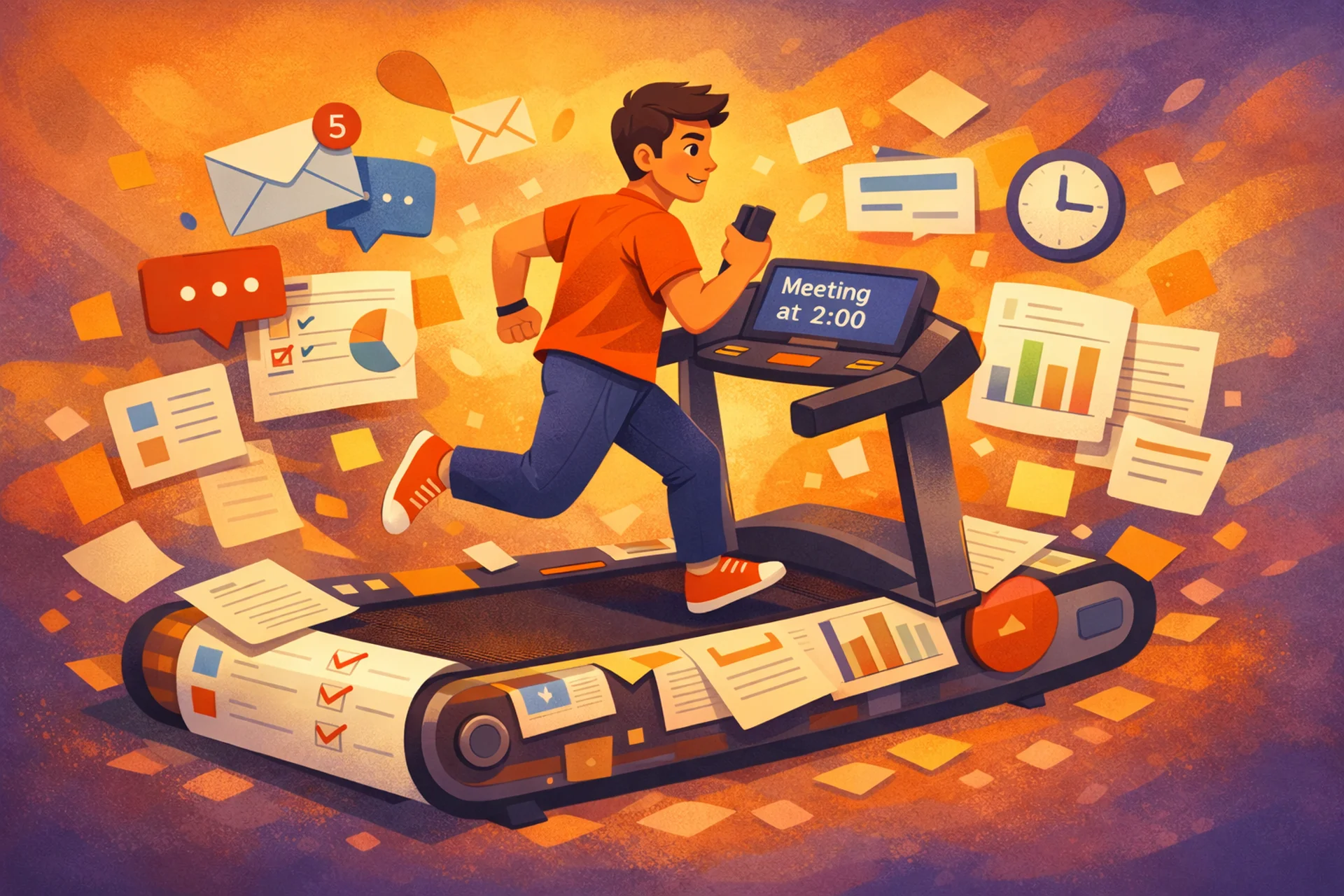
It is the kind of activity where the process starts to matter more than the result. People stay busy, but not always useful. Tasks get done mainly to create the appearance of productivity, without bringing real value to the company or to the employee.
In other words, it is an “urgency addiction” that replaces real progress with endless reports, meetings, updates, and constant busyness without actually helping anyone move closer to the goal.
Research from Asana’s Anatomy of Work in 2022 showed just how serious this problem already was:
- Workers switched between 10 apps up to 25 times a day, which fragmented communication and reduced efficiency.
- 71% of workers experienced burnout in 2020, and the number of employees working late rose to 87%.
- 7 out of 10 workers said they would be better equipped to hit their goals if they had clearer processes for managing work.
And honestly, it is easy to imagine that today the situation has only become worse.
What counts as work about work?
Work about work often looks harmless in the moment:
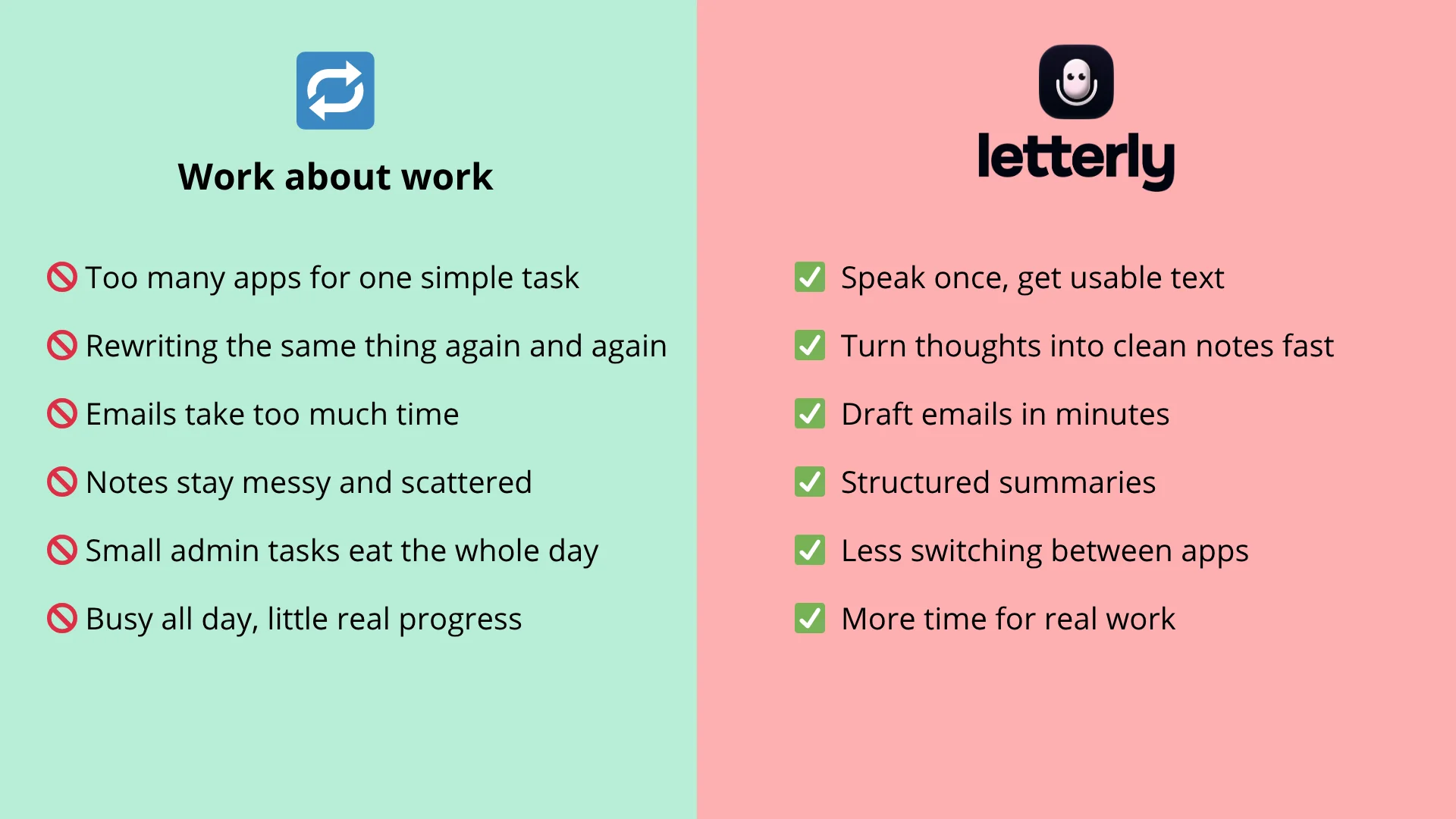
- switching between tools just to get one piece of writing done
- rewriting a voice memo into a proper summary
- turning bullet points into a message your team can read
- cleaning up a rough draft before sending it
- searching across chats, docs, and notes for one missing detail
- writing meeting takeaways from memory
- organizing thoughts before you even start the real task
None of this feels dramatic.
But together, these tasks drain time, attention, and momentum. That is why so many people end the day feeling busy but oddly unfinished.
How to reduce administrative tasks in your workflow
One of the easiest ways to reduce work about work is to stop forcing every idea through the keyboard first.
Speaking is faster, lighter, and closer to how thoughts actually arrive.
Instead of waiting until you have the perfect sentence, you can say:
- what happened in the meeting
- what needs to be done next
- what you want to tell a client
- what belongs in the report
- what you are trying to figure out
Then the raw thought becomes something usable with Letterly.
Letterly is built around this workflow: you speak naturally, and the app turns that speech into structured, ready-to-use text such as notes, emails, summaries, messages, posts, and to-do lists. It also offers rewrite options, so the same spoken input can become a more polished output without starting from scratch.
Here is what that changes in practice:
1. Meeting follow-ups get easier
Instead of keeping rough notes and rewriting them later, you can speak your summary right away and turn it into a clean recap or action list.
2. Emails start faster
You do not have to stare at a blank screen and build the message line by line. You can say what you mean first, then turn it into a polished email.
3. Brain dumps become structured notes
Messy thinking is not a problem if the output can be cleaned up automatically.
4. Fewer ideas get lost
If capturing a thought takes almost no effort, you save more of them.
5. Less energy goes into formatting
The task is no longer “write and organize from zero.” It becomes “speak, review, send.”
That is a much smaller mental lift.
Learn how to minimize distractions and focus on high-priority tasks with Letterly, so you can flourish at work.
Got more questions? Email us at hi@letterly.app — we’re happy to help.