


How to Learn From Podcasts: Turn Every Episode Into Notes, Transcripts, and Action Steps
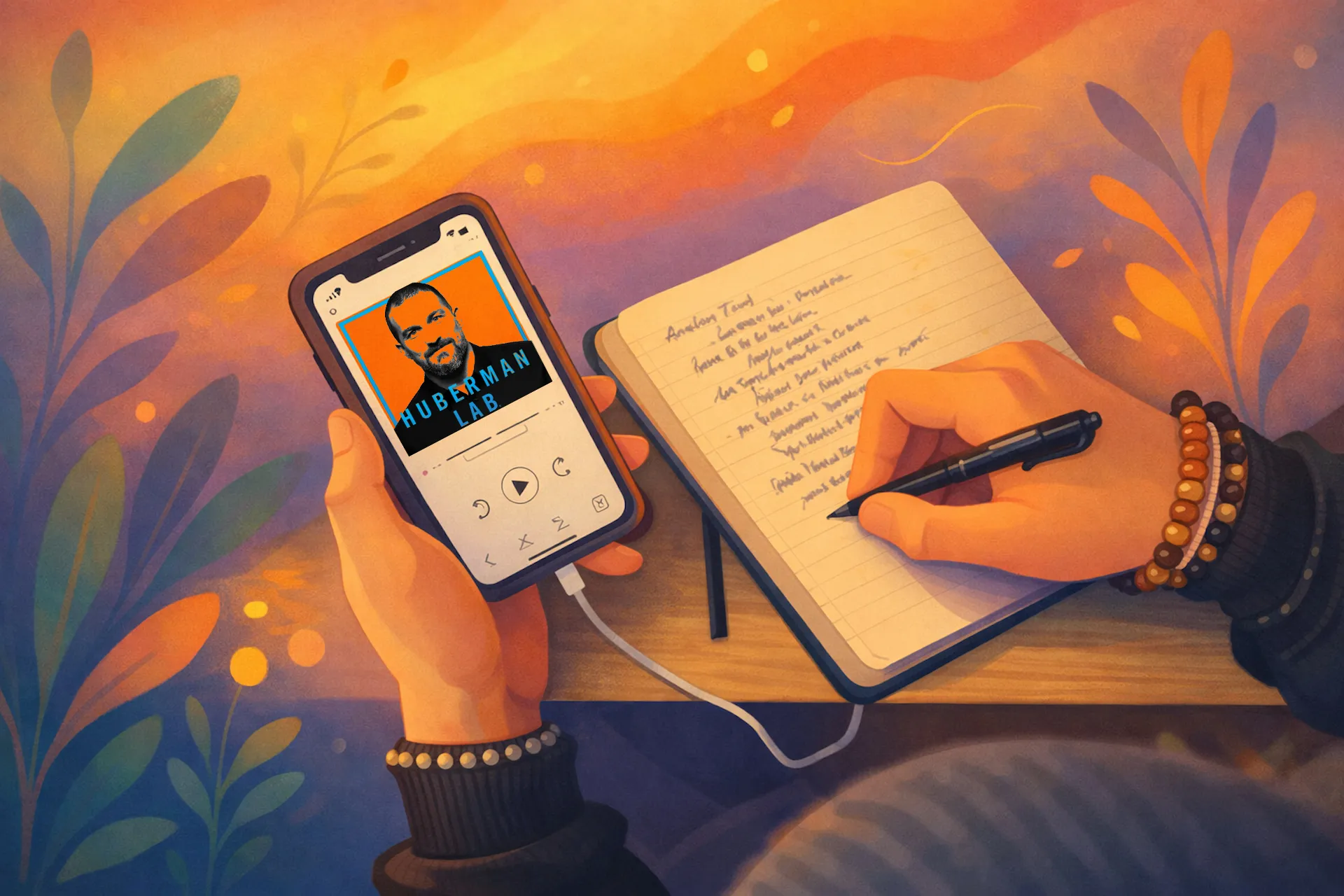
Podcasts aren’t meant to be background noise. They’re one of the easiest ways to keep learning while you’re busy. But when you’re listening while cooking, commuting, or cleaning, your brain treats most of it like “nice input” instead of something to store and reuse, so you finish the episode and the insights quietly disappear.
The good news: you don’t need to pause every two minutes and write notes by hand. You just need a workflow that turns an episode into something your brain can keep: a podcast transcript, a short summary, and a few notes you’ll actually use.
Let’s dive into how our brain processes information. 👇
How your brain handles audio input
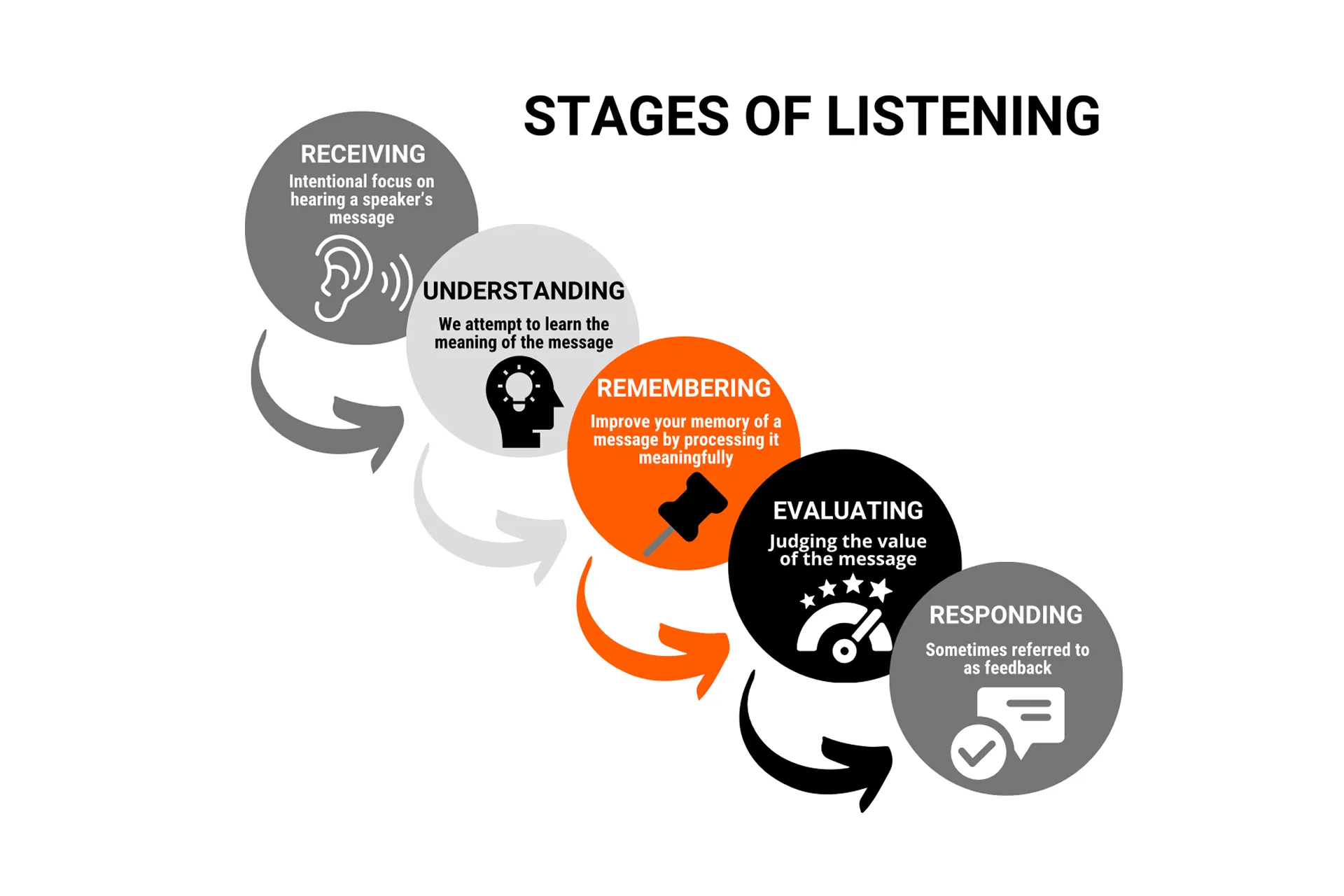
Podcasts are easy to consume, but hard to keep.
When you listen passively, your brain hears the words but doesn’t do much with them. The episode keeps moving, your attention drifts, and most of what sounded “useful” fades within hours.
To actually learn, you need active listening: doing something with the ideas as you hear them. That “something” is usually note-taking, because it forces your brain to encode the information, not just receive it. The moment you rephrase an idea in your own words, you’re already processing it at a deeper level, which makes it easier to remember and reuse.
Notes also work as external memory. Even a short recap creates “hooks” you can come back to later, so the episode becomes searchable, reviewable, and actionable, not just a nice moment in your headphones.
How to remember a podcast after listening
Learning from podcasts usually needs one extra step after listening:
- Capture key points so they don’t vanish.
- Summarize in your own words so you actually understand.
- Save one action or question so it changes something.
The goal isn’t perfect notes. It’s a tiny learning system you can repeat. And you don’t have to do it manually.
But let’s be real: taking notes while listening can feel like homework. After a long day, the last thing you want is to pull out a notebook just to “study” a podcast about work-life balance on your commute home. This is where an AI podcast-notes workflow helps: it turns listening into a transcript, a summary, and reusable notes, so you remember what you’ve heard without drowning in endless bullet points.
How to transcribe a podcast episode with Letterly
If you’ve ever wondered how to get transcription of podcast episodes without doing it manually, the easiest way is to use AI transcription and then rewrite the text into notes.
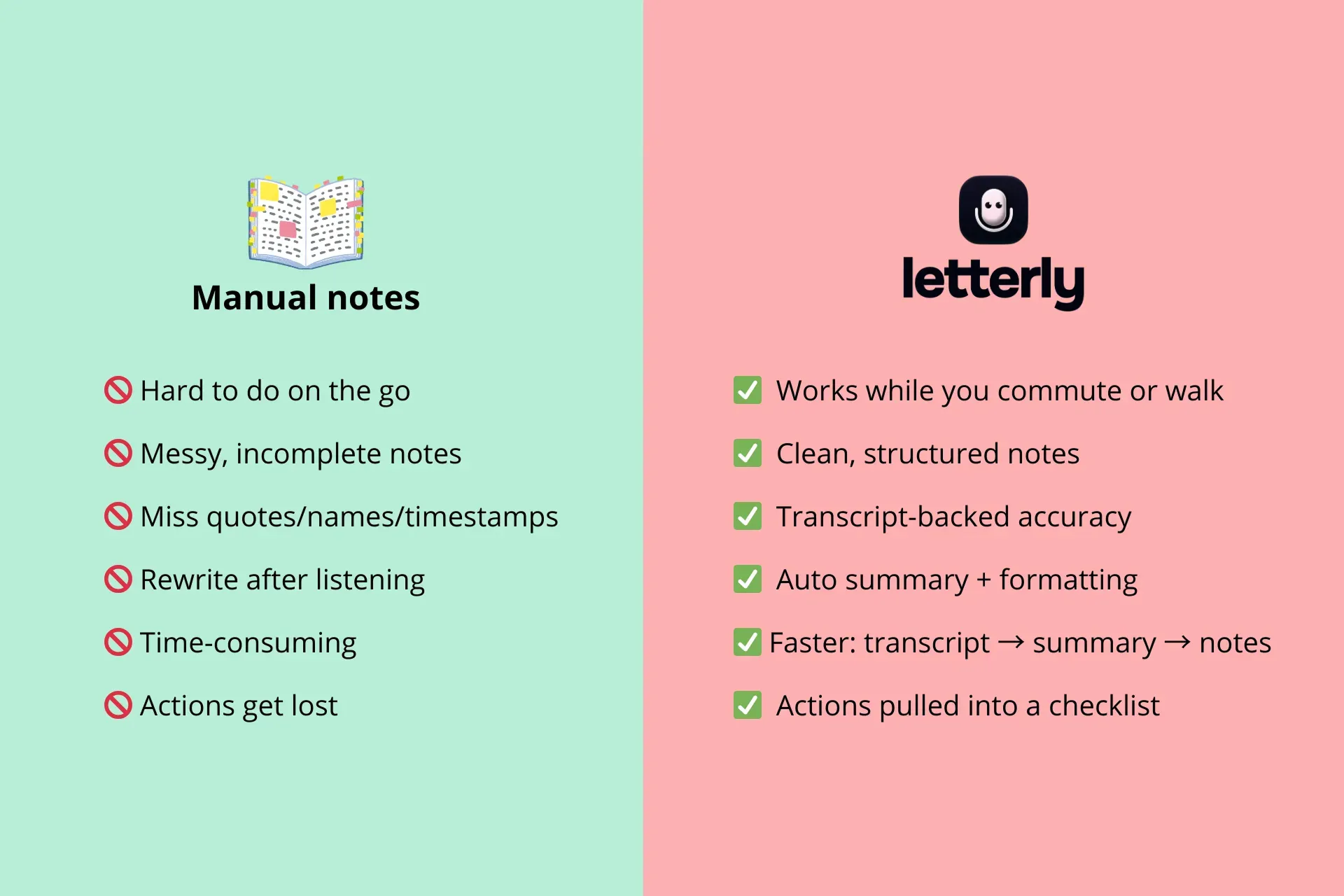
Let’s see how your Letterly assistant can help you build a podcast routine. You don’t have to be distracted by pausing a podcast to make notes — Letterly will do it for you while you enjoy the episode:
- Listen normally and enjoy the episode while Letterly captures the audio.
- Choose a rewrite option.
- Get clean, reusable podcast notes.
Revisit it anytime. Letterly keeps everything safe and organized, like a podcast summarizer that turns the raw transcript into notes you’ll actually reuse.
Quick example
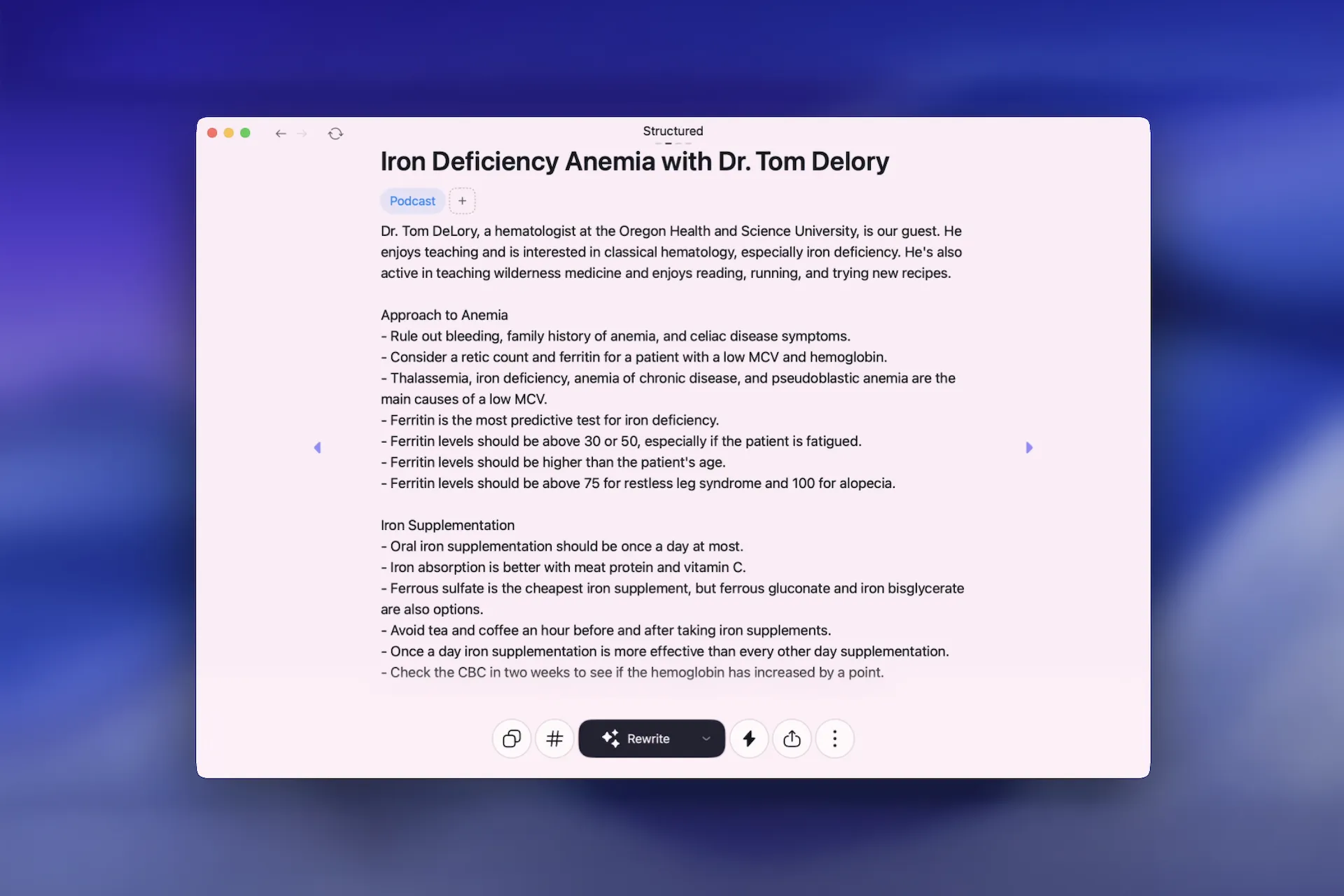
I listened to a 30-minute podcast episode about iron deficiency anemia, and here’s how Letterly turned it into a short, structured note.
For this one, I first used the Significantly rewrite option to clean the transcript, then Structured to format the key points into a clean, scan-friendly summary I can revisit later. I’m not a medical professional, so details like lab values, thresholds, and which tests to check are easy to forget. Saving the episode as a structured note makes the information actually usable, not just something I listened to once.
Try it with your next episode. Use Letterly as an AI-powered podcast summarizer to turn the audio into text, shape it into a clean note, and keep your “one action” ready for later.
Your podcasts can stay enjoyable, but they can also start paying you back.
I hope Letterly helps you remember more from every podcast you listen to. 😊
Got questions? Email us at hi@letterly.app – we’re happy to help.