How to Write a Blog Post (That People Actually Read)


It doesn’t matter whether you write on Medium from time to time to share your personal experience, post on LinkedIn to attract customers or new work opportunities, or blog full-time. If you want your posts to work, you need to understand the core principles of writing. Otherwise, you risk cringing when you reread them and losing the results you could have gotten. Let’s dive into it.
Choosing a Blog Topic and Niche
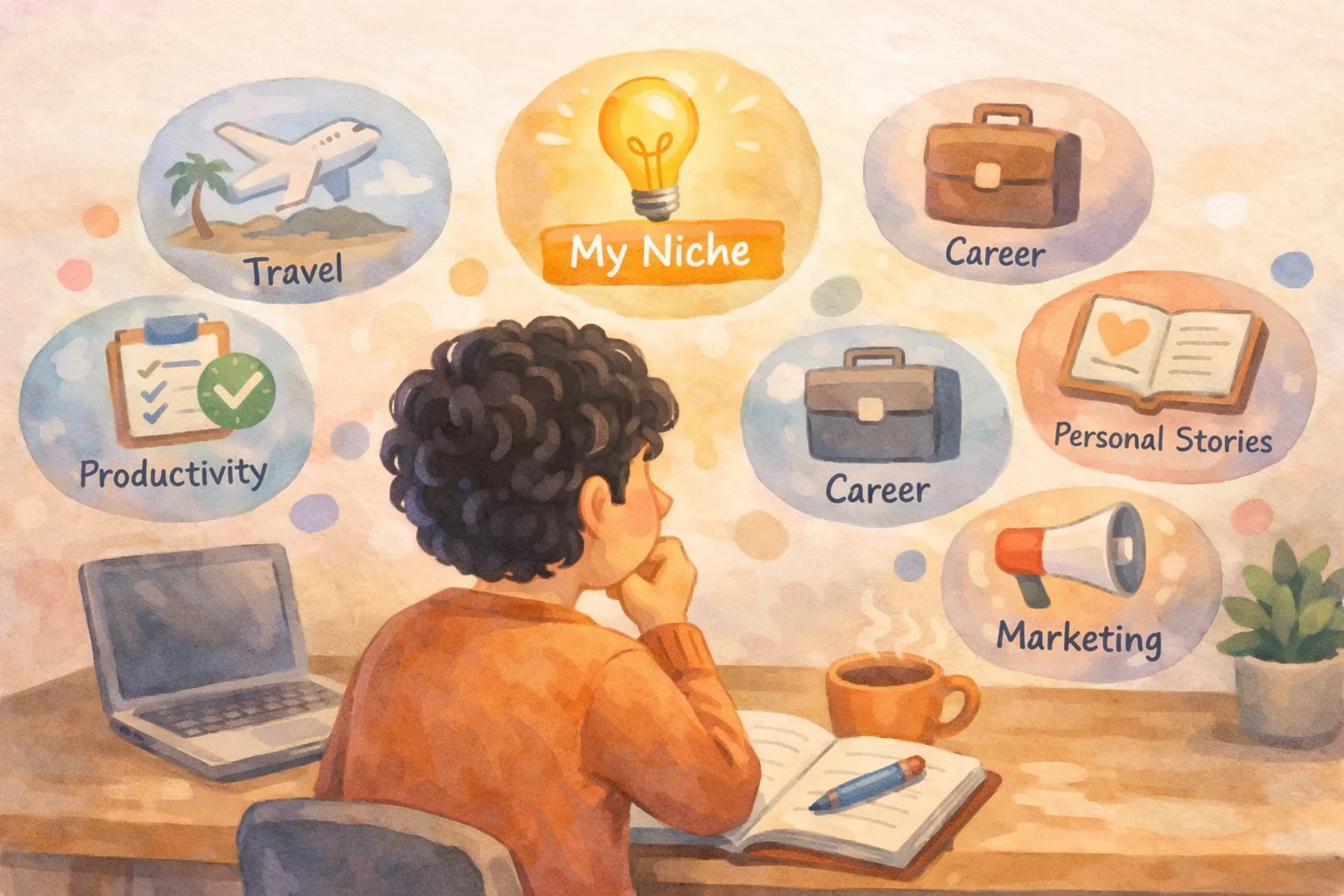
If you’re just starting out, don’t jump straight into writing posts. First, decide what you’re actually going to write about.
This step matters more than people think.
It’s very hard to stay focused and consistent when your scope is too broad. One day you write about travel, the next about productivity, then suddenly about personal growth, remote work, and skincare. At that point, it’s not a blog. It’s just random thoughts living in one place.
A niche does not have to be painfully narrow. But it should be clear enough that both you and your readers understand what your blog is really about.
A good niche helps you:
- come up with ideas faster
- build a recognizable voice
- attract the right audience
- avoid burnout from constantly reinventing yourself
Questions to ask yourself before choosing your niche
- What topics can I talk about for a long time without getting bored?
- What do people already ask me for advice on?
- What experiences do I have that could be useful to others?
- What kind of content do I genuinely enjoy reading myself?
- Who do I want to help, entertain, or attract with this blog?
- Do I want this blog to bring me clients, job opportunities, readers, or just a creative outlet?
- What do I know enough about to write 20 posts on, not just 2?
- Which topics feel natural for me, and which ones feel forced?
- What kind of personal stories am I actually comfortable sharing?
- If someone read five of my posts, what would I want them to remember me for?
Once you answer these, patterns usually start to show up. And that’s where your niche begins. Not from forcing a trendy category, but from noticing what keeps coming back in your own thinking.
Tech stuff you need to know before starting your blog
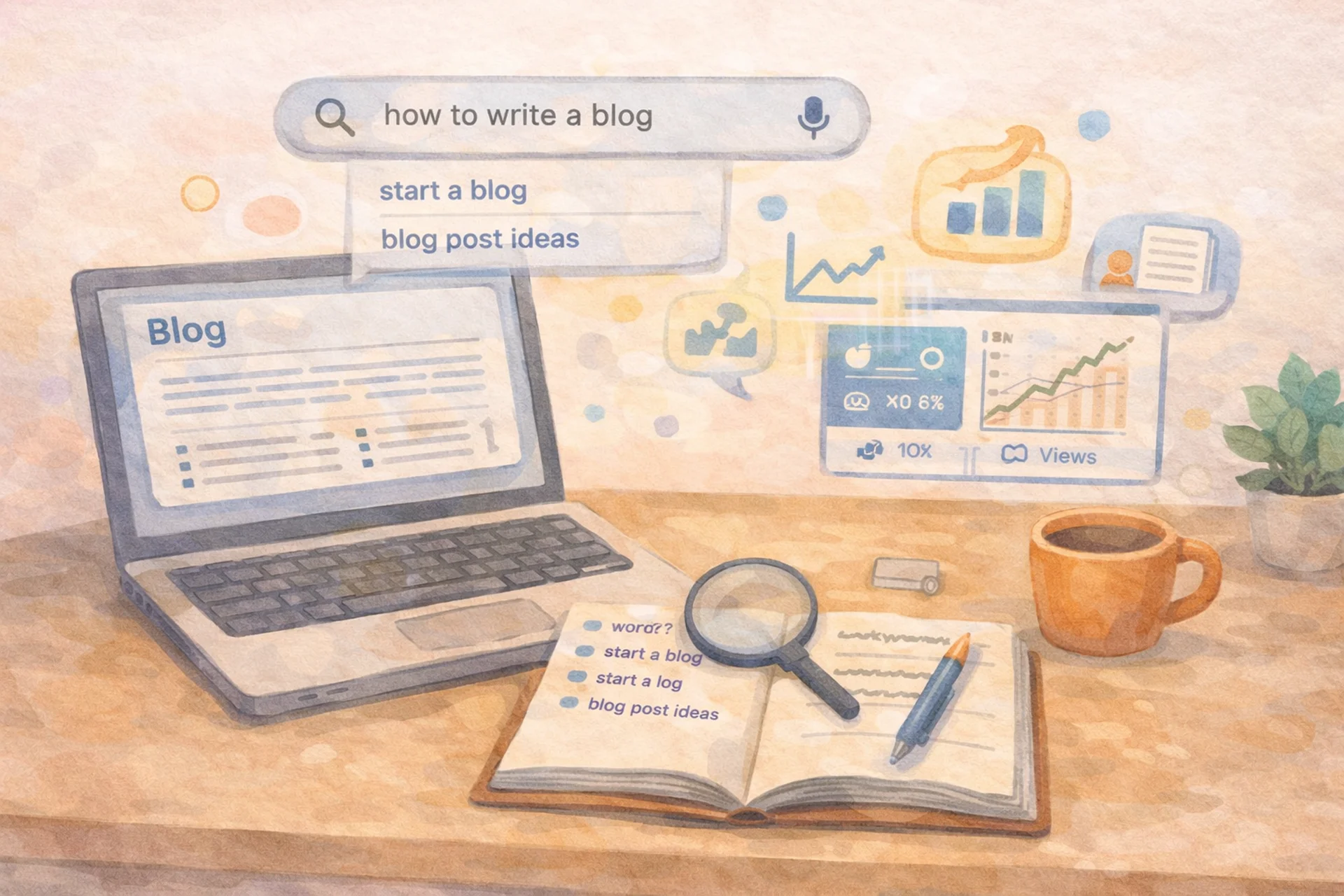
Before you write your first post, there’s one thing most beginners ignore: writing alone is not enough.
If you want people to actually find your blog, you need to understand how search works. Not in a complicated SEO way. Just the basics.
Two things matter here: keyword research and analytics.
1. Keyword research: how people find your posts
Every blog post starts with a search.
Someone types:
- “how to write a blog post”
- “blog post ideas for beginners”
- “how to start a blog”
Your job is simple: write content that matches what people are already looking for.
That’s what keyword research is.
You don’t need advanced tools to start. Just understand:
- what exact phrases people search
- how they phrase their problems
- what kind of answers they expect
2. Analytics: what actually works
Once you start publishing, guessing is over. Now you look at data.
Analytics shows you:
- which posts get traffic
- what people click on
- where they leave
- what keeps them reading
This is how your blog improves over time. Without analytics, you’re just writing in the dark.
With analytics, you see patterns:
- which topics work
- which titles attract clicks
- what style people actually read
And then you do more of that.
Tips to write the post
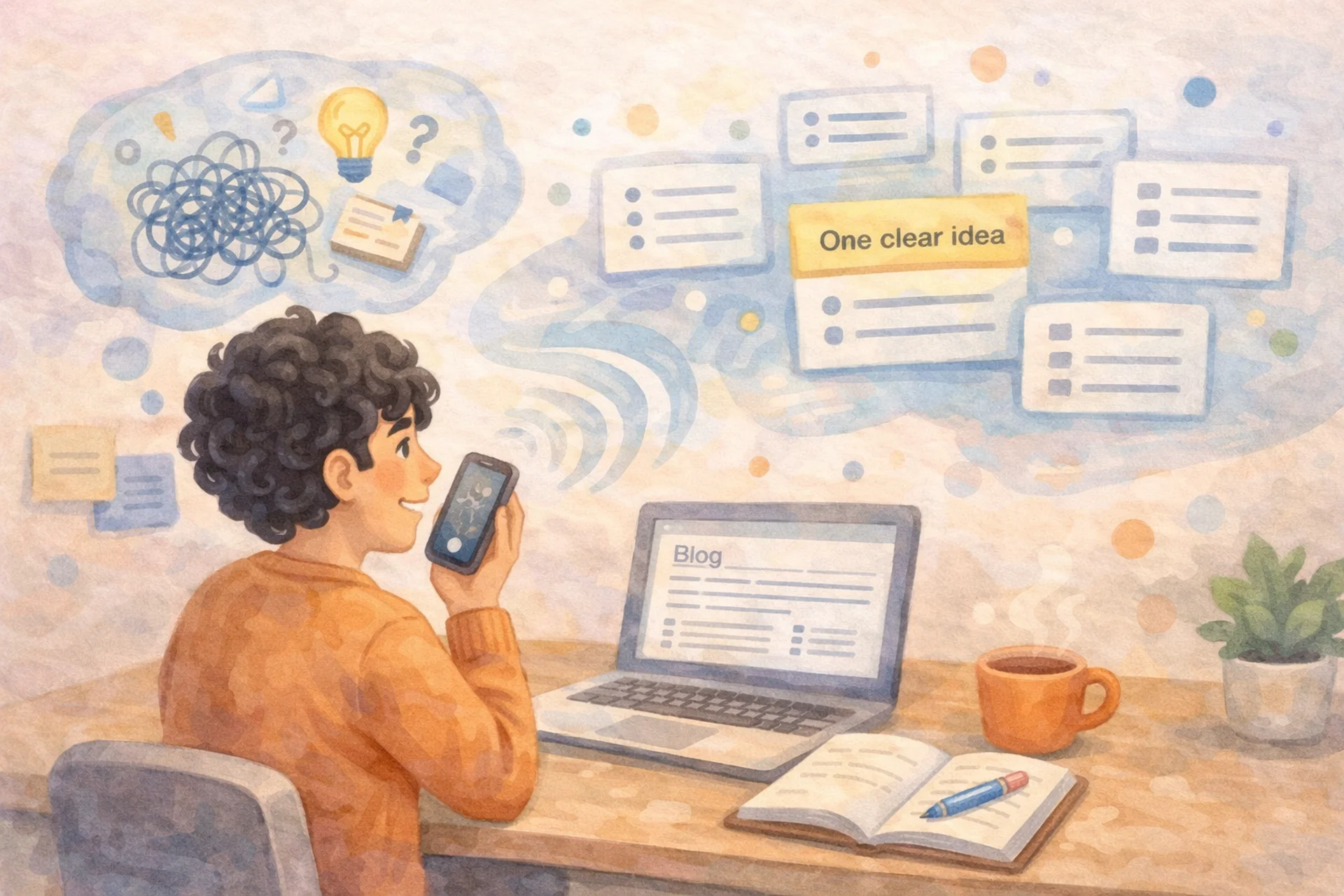
1. Start with one clear idea
Most weak blog posts have the same problem: they try to cover too much at once.
A beginner sits down to write and thinks, “I’ll make this post about productivity, motivation, focus, burnout, better habits, and maybe a few tools too.” The result is usually a post with no center. It goes in five directions, says a little about each, and leaves the reader with nothing clear to remember.
A stronger post starts with one idea. Not three. Not five. One.
For example, “Productivity tips for entrepreneurs” is too broad. It sounds like the kind of post that will repeat generic advice and try to please everyone. But “Why you feel busy but get nothing done” is specific. It has tension. It gives the reader a reason to keep reading.
A good rule is simple: if you cannot explain the core idea of your post in one sentence, it is probably still too vague. Before you write anything else, make sure you know exactly what your post is really about.
2. Dump your thoughts first, don’t write yet
This is the step where many people get stuck.
They open a blank page and immediately try to do everything at once: think, structure, phrase, edit, and sound smart. That almost never works. Writing becomes slow, stiff, and frustrating because the brain is trying to generate ideas and polish them at the same time.
It is much easier to separate those steps.
First, talk through the idea. Explain it as if you were telling a friend what the post is about and why it matters. Say what annoys you about the topic, what you noticed, what example comes to mind, and what point you actually want to make. At this stage, structure does not matter yet. You are not writing the final post. You are getting the raw material out.
This is exactly where Letterly fits in. Instead of staring at a blank page, you just speak. Letterly turns your messy, half-formed thoughts into clean text, so you can start with something real instead of starting from nothing.
3. Find the structure inside the mess
Once your thoughts are out, structure becomes much easier to see.
This is important because many people imagine structure as something they have to invent before they begin. In reality, it usually appears after you have said what you need to say. When you look at your raw draft, you start noticing natural parts: the introduction, the problem, the explanation, the practical advice, the conclusion.
Most effective blog posts follow a simple shape. They begin with a hook that explains why the topic matters. Then they describe the problem or tension. After that comes the key insight, followed by practical steps or examples. Finally, the post ends with a short wrap-up that leaves the reader with one clear takeaway.
So you are not creating structure from scratch. You are uncovering it from ideas that are already there.
4. Write blog posts faster with a voice-first approach
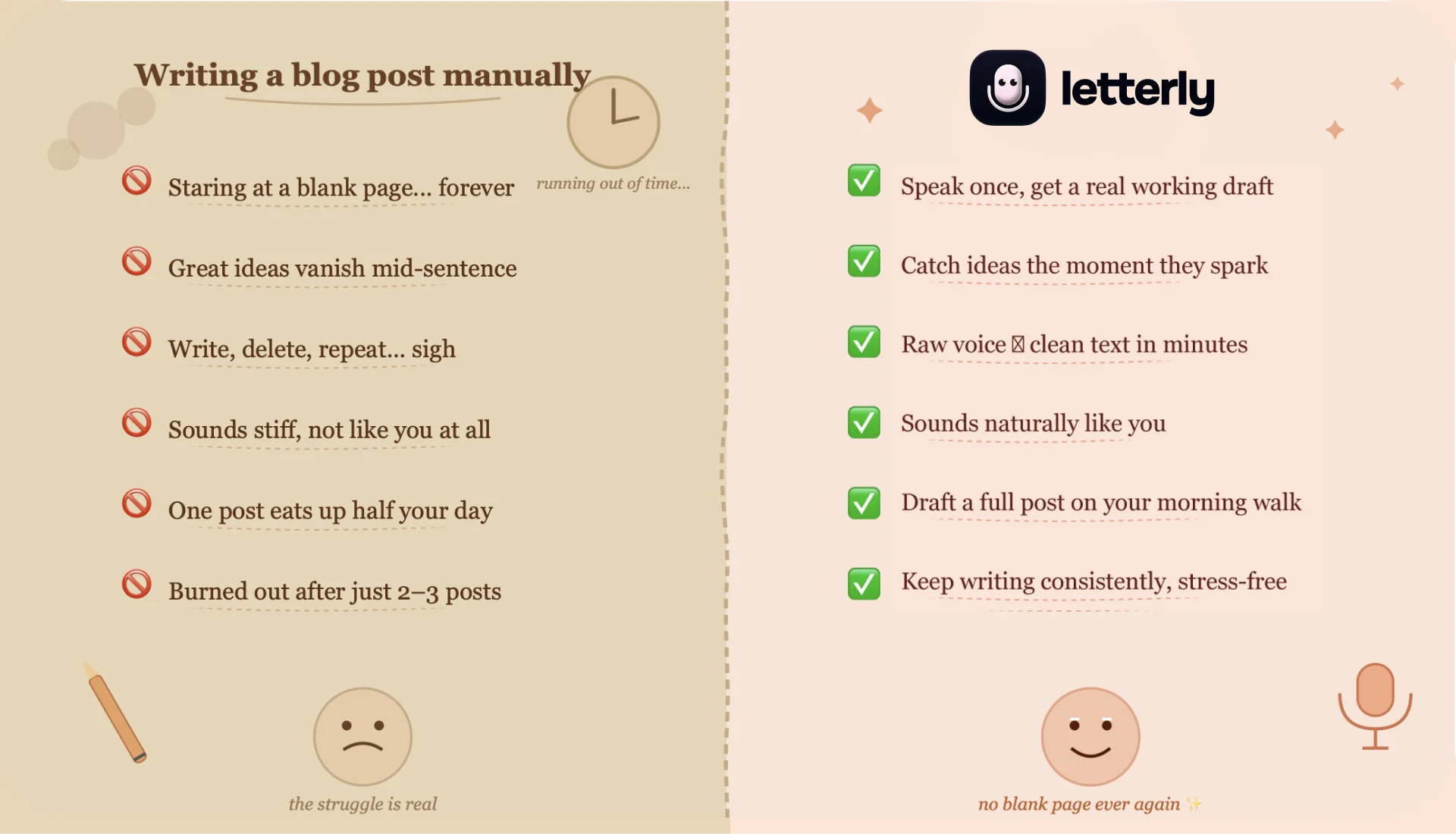
Most people assume the slow part of writing is the typing. It rarely is.
The real bottleneck is hesitation — stopping after every sentence, doubting every phrase, trying to sound polished while you’re still in the middle of figuring out what you want to say. That internal friction is what makes writing feel heavy. And it’s exactly why so many drafts never get finished.
Speaking removes that friction.
When you talk through an idea, you move faster than your inner critic. You stay closer to your real voice. You build momentum instead of losing it. If you’ve ever wondered how to write blog posts faster, the honest answer is: stop writing first. Start talking.
This is where Letterly comes in. Instead of staring at a blank page, you open the app and speak. Letterly transcribes your voice and turns even messy, half-formed thoughts into clean, readable text — so you always have something real to work with from the very first minute.
That answers another common question: how do you structure a blog post when you don’t know where to start? You don’t have to figure it out upfront. Just speak through the idea — what the problem is, why it matters, what you’d tell a friend about it. The structure usually becomes obvious once your thoughts are out. Then you organize, trim, and polish.
It works even when you’re away from your desk. You can draft your whole post on a walk, during a commute, or in between meetings. Come back, clean it up, and you’re most of the way there. That’s how to write blog posts quickly without sacrificing quality — not by rushing the thinking, but by removing the friction around it.
Letterly isn’t an AI app that writes papers for you. It’s a tool that helps you get your own ideas out faster, in your own voice, without the blank-page paralysis that stops most people before they even begin.
No blank page. No pressure. Just flow.
Writing a good blog post is not about sounding impressive. It is about having a clear idea, getting your thoughts out, and shaping them into something useful for the reader. A voice-first approach makes that process much easier.
Got questions? Email us at hi@letterly.app – we’re happy to help.