How to Overcome Writer's Block


It doesn’t matter whether you write recipes for a small blog or a three-thousand-page novel. Sooner or later you end up staring at a blank page with nothing coming out. Everyone who writes has been there. The good news is that a block is not a verdict on your talent, and there are ways out of it.
What causes writer’s block
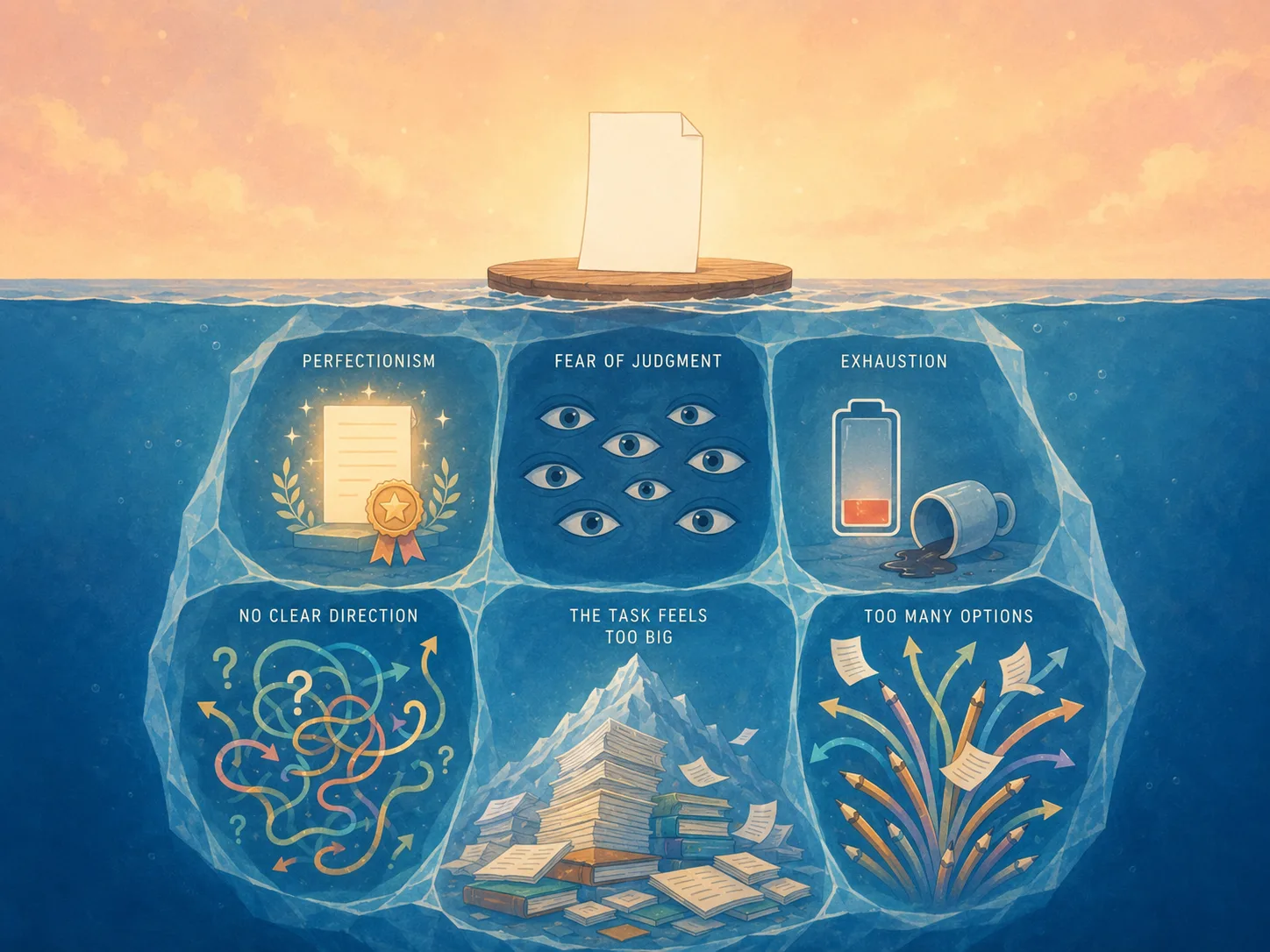
Physically, a block is your mind reacting to something that feels scary or stressful. It’s the same “fight or flight” rush you’d feel if a bear was charging at you, except this bear is imaginary. Mentally, it’s a wave of anxiety so strong that you freeze and can’t move forward.
Other reasons:
Fear isn’t the only thing that stops people. Some blocks have much more ordinary causes.
Perfectionism. You feel pressure to write something great, and since the first attempt won’t be great, nothing gets written at all.
Fear of judgment. You’re not really stuck on the words. You’re stuck imagining someone reading them and reacting badly.
No clear direction. You don’t yet know what you’re trying to say, so there’s nothing to put down. This one gets misread as a block constantly.
Exhaustion. The tank is empty. This looks like a block, but it’s tiredness wearing a costume.
The task feels too big. The whole project sits in front of you at once, and the size of it freezes you.
Too many options. Not fear, not laziness, just an overwhelming number of ways to say the thing. We’ll come back to this one, because the fix for it is different from all the others.
Small moves that get you writing again
Start with the easy moves. They work more often than they have any right to.
🧑💻 Write something less demanding. Switch to a task with lower stakes: a caption, an email, a note to a friend. The point isn’t the piece, it’s getting your hands moving again.
📝 Explore writing prompts. Read a few and see if one catches. You’re not looking for the perfect prompt, just for a small spark of interest.
📒 Keep a journal nearby. Ideas rarely arrive at your desk. They arrive on the bus, in the shower, halfway through a conversation. Catch them when they show up.
🧘♀️ Shrink the goal. One paragraph. One sentence. Ten minutes on a timer. A block feeds on the size of what you’re asking of yourself.
When the problem is that you know too much
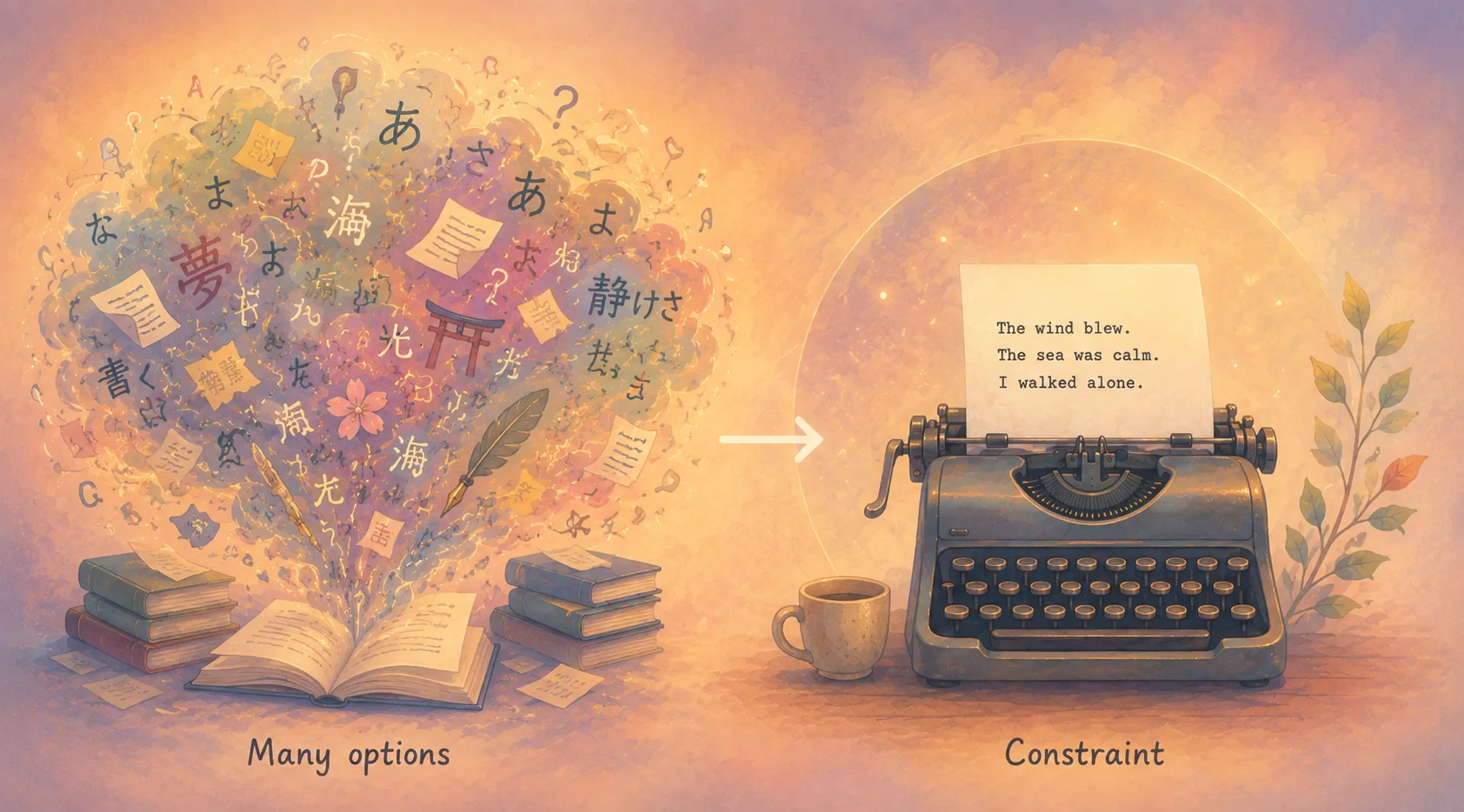
Now back to that last reason. Too many options is the one almost nobody names, and the classic advice doesn’t touch it, but it can be the exact thing that’s stopping you.
The lesson isn’t “learn a second language.” It’s that sometimes you’re not blocked, you’re flooded. And the way out isn’t pushing harder. It’s making the field smaller.
Murakami’s method worked, but let’s be honest: retyping a novel in a foreign language on a machine with no delete key is not a realistic Tuesday-morning plan for most of us.
The modern version is much simpler. Speaking is always easier than typing. When you talk, you don’t agonize over word choice, you just say the thing. All those options that paralyze you on the page stop mattering out loud.
That’s the part Letterly is genuinely good for. Open it, talk for two minutes about whatever you were trying to write, and read the transcription back. It’s usually messier than you’d like and clearer than you expected. From there you can play with the rewrite options. Try Magic and let it pick the best approach, or Shorter if you rambled. Read the result, and notice that you now have something to react to instead of a blank page.
Once the page isn’t blank anymore, the fear that was holding you in place quietly loses its grip, and you go back to writing it yourself, which was always the plan. The page only has to stop being blank once.
I hope the next blank page feels a little less intimidating from now on! 😊
Got questions? Email us at hi@letterly.app – we’re happy to help.