


How to Start a Gratitude Journal That Actually Sticks: A Simple Guide

Sometimes we get stuck in a negative cycle and struggle to shift our focus. One simple habit can help, yet many people underestimate it or assume it takes too much time and effort: keeping a gratitude journal. In this article, I want to change that perception and show that gratitude journaling can be simple, realistic, and easy to maintain.
What is a gratitude journal?
A gratitude journal is a simple positive psychology practice that helps you focus on what is good in your life. The idea is straightforward: on a regular basis, you write down the things you feel grateful for, whether they are big moments, small wins, or everyday details. Over time, this habit can help you pay more attention to the positive rather than getting stuck in what is missing or going wrong.
How gratitude journals help
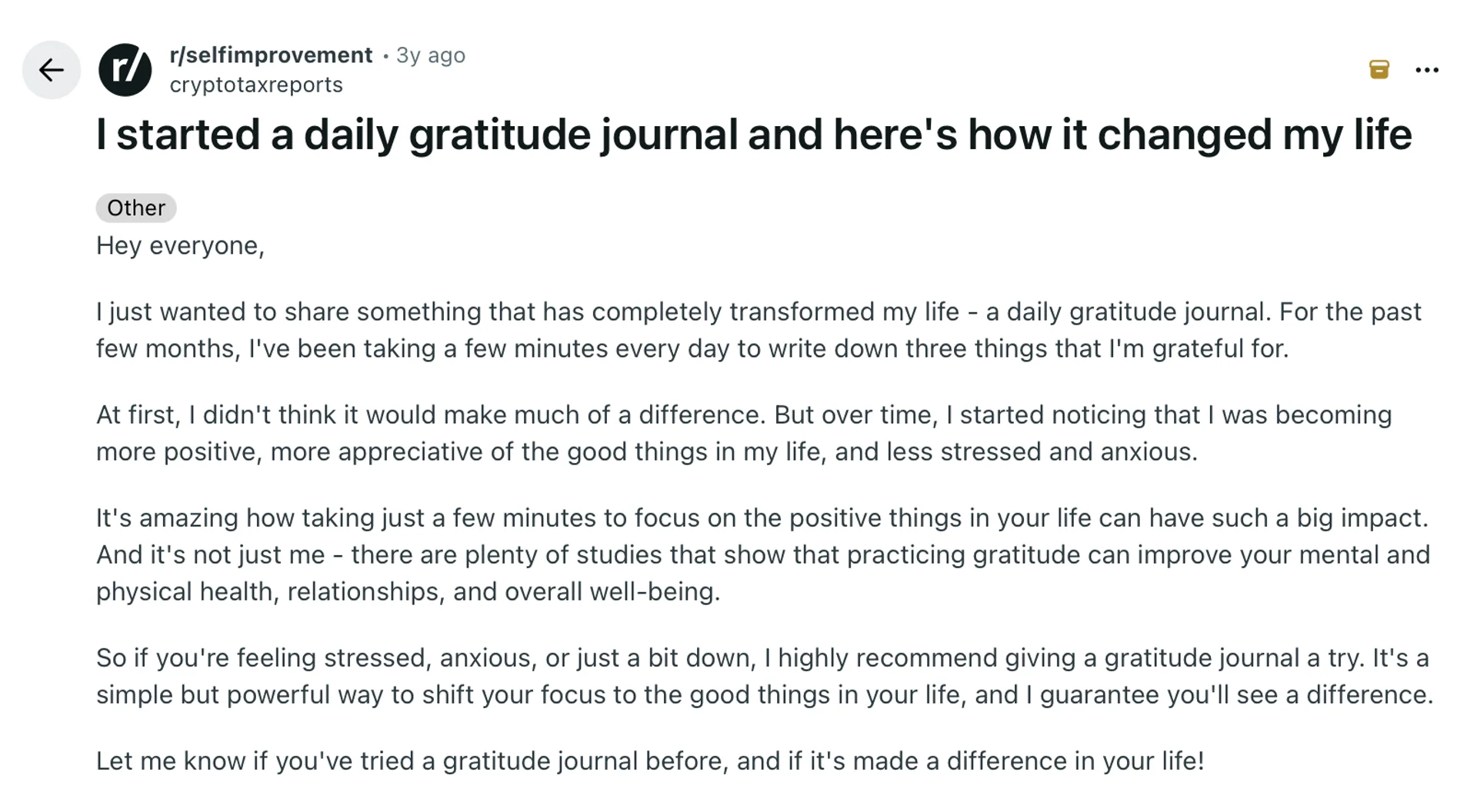
Keeping a gratitude journal can do more than just help you “think positive.” Research suggests that people who practice gratitude regularly tend to feel happier and more satisfied with life. Gratitude has also been associated with better mental health, fewer symptoms of anxiety and depression, and a more optimistic outlook overall.
Some studies also suggest that gratitude practices can improve mood, help people worry less, and make it easier to notice the good in everyday life. Over time, this small habit may support emotional well-being and even work alongside other mental health tools or therapeutic approaches. In other words, a gratitude journal is not just a feel-good exercise. It can be a practical way to strengthen a healthier mindset.
Why most people quit gratitude journaling

Most people do not quit gratitude journaling because it does not work. They quit because they start with the wrong expectations.
A lot of people imagine gratitude journaling as something they need to do every day, in a perfect notebook, with thoughtful and meaningful entries each time. Very quickly, that turns a simple habit into another task that feels easy to skip. When journaling starts to feel like homework, consistency disappears.
Another common reason is repetition. After a few days, many people feel like they are writing the same things again and again: coffee, sunshine, a good meal, a kind message. They assume that means the practice is not helping. In reality, gratitude journaling is not about producing original thoughts every day. It is about training yourself to notice what is already good in your life, even when it seems small or familiar.
Some people also quit because they try to force positivity when they are having a hard time. On difficult days, writing down things to be grateful for can feel fake, annoying, or emotionally distant. That does not mean the habit is wrong. It usually means the approach is too rigid. Gratitude journaling works better when there is room for honesty. You do not have to pretend everything is great. You only need to notice one thing that felt supportive, comforting, or meaningful.
Finally, many people stop because the process feels too slow. Sitting down, opening a notebook, and trying to come up with the “right” words can feel like too much effort, especially at the end of a long day. That is why the best gratitude journal is often the one that feels easiest to keep. The simpler the process, the more likely you are to return to it.
In most cases, people do not need more discipline. They need a version of gratitude journaling that feels natural, quick, and realistic enough to fit into everyday life.
Gratitude journal with Letterly: the fast way to capture grateful thoughts

You want to be more grateful, but real life gets in the way. At the end of the day, writing feels like effort. Typing feels slow. And staring at a blank page does not exactly make the habit easier to keep.
A gratitude journal only works if it is easy to stick with.
Letterly is a gratitude journal app that helps you capture grateful thoughts quickly. You simply speak like you are leaving yourself a short voice note, and Letterly turns it into clean, readable text you can save, organize, and come back to later.
What you can do with a gratitude journal in Letterly
- Capture gratitude entries instantly by voice
- Turn scattered thoughts into a clear, structured note
- Add titles, tags, and helpful context
- Rewrite entries into different formats, such as a short reflection, a detailed entry, or bullet points
- Build a searchable archive of gratitude entries over time
How to start a gratitude journal with Letterly step by step

Step 1: Keep your phone nearby
Make it easy to journal when the moment feels right, whether that is in the morning, before bed, or during a quiet break in the day.
Step 2: Record a quick gratitude entry
Open Letterly and speak naturally. You do not need polished sentences or a perfect structure.
A simple format can help:
- What happened today
- What you feel grateful for
- Why it mattered
- How it made you feel
- Anything you want to remember later
Even 20 to 30 seconds is enough.
Step 3: Let Letterly turn it into clean text
Once you finish speaking, Letterly creates a readable entry you can actually keep.
You can also rewrite it into a format that suits you best, for example:
- A short daily gratitude note
- A more personal reflection
- Bullet points with key moments
- A simple recap of what went well today
Tips to stay consistent with a gratitude journal
These simple habits can make gratitude journaling much easier to maintain:
- Keep your entries short
- Focus on specific moments, not generic phrases
- Do not wait for the “perfect” mindset
- Speak first, edit later
- Aim for consistency, not perfection
With a simple voice-first routine, gratitude journaling becomes faster, easier, and much more realistic to keep as a daily habit.
Got questions? Email us at hi@letterly.app – we’re happy to help.