


Best Dream Diary App: Capture Dreams Fast With Voice Notes

Nowadays, most people have heard that dream journaling can support self-reflection, mental clarity, and personal growth. Some people also use it as a starting point for dream interpretation.
The real challenge is consistency.
You wake up with a vivid scene in your head, reach for a notebook… and by the time you’re ready to write, the details are already gone. Dreams fade fast, and typing or handwriting is often too slow when you’re still half-asleep.
That’s why audio dream journal works so well for dream journaling. You can capture the dream in 30 to 90 seconds, then turn it into a clean, readable entry afterward. Fast first, polished second.
Now let’s look at what a dream journal actually is, and how to keep one in a way that’s easy enough to stick with.
What is a dream journal?

A dream journal (or dream diary) is a habit of recording your dreams right after waking up.
It is not about writing perfect prose. It is about saving the raw material. Characters, places, emotions, weird details, and any patterns you notice.
Over time, a dream journal can help you. Here are some of the benefits of dream journaling over time:
- More self-awareness. Dreams often reflect stress, worries, goals, and what your brain is processing, so journaling can support reflection.
- Memory training. The habit strengthens attention to inner experiences and helps you practice remembering sequences.
- Spot patterns over time. Recurring themes, places, people, emotions, and “repeat dreams” become easier to notice.
- Emotional processing. Writing (or dictating) a dream can help you name feelings and “unpack” intense nights.
- Improved awareness of sleep habits. You may notice what affects your dreams: late meals, alcohol, screens, stressful days, medications, etc.
This is not medical advice, of course. It is simply a practical tool for self-observation.
Why most people quit dream journaling
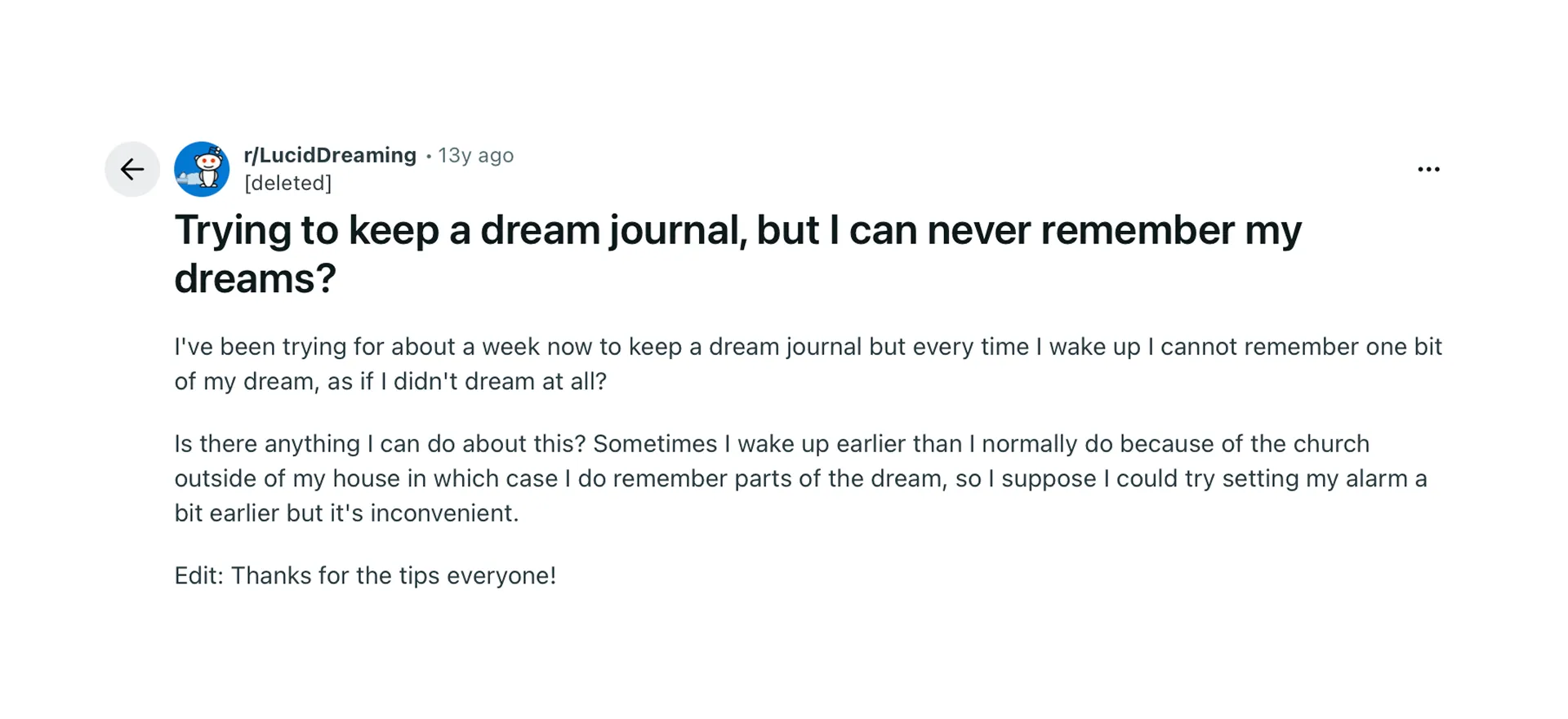
Dream journaling sounds simple. But three things usually break the habit:
Dreams fade fast
If you wait “until later,” you lose the details.
Writing feels like work
Even 5 minutes of typing can feel too much when you just woke up.
You don’t know what to write
A blank page is harder than a guided format.
That is why voice is such a good fit here. You can capture the dream first, then clean it up after.
Dream Journal With Letterly: The Fast Way to Capture Dreams

Most dreams disappear in minutes.
You wake up, reach for your phone, and the details slip away. Writing feels slow. Typing feels even slower. And a blank page is not very welcoming at 7 a.m.
A dream journal only works if it is easy to keep.
Letterly is a dream journal app that helps you capture dreams fast. You speak your dream like a quick voice note. Then Letterly turns it into clean, readable text you can save, tag, and revisit later.
What you can do with a dream journal in Letterly
- Capture dreams instantly by voice
- Turn messy speech into a clear entry with structure
- Add titles, tags, and key details
- Rewrite into different formats (short recap, detailed log, bullet points)
- Build a searchable archive of your dreams over time
How to start a dream journal with Letterly step by step
Step 1: Keep your phone close
Put your phone within reach before sleep. The goal is zero friction in the morning.
Step 2: Record the dream the moment you wake up
Open Letterly and record a quick voice note. Don’t aim for perfect sentences.
Use this simple order:
- Where you were
- Who was there
- What happened
- How it felt
- Any standout symbols or objects
Even 20 seconds is enough.
Step 3: Let Letterly turn it into clean text
Once you stop speaking, you get a readable draft you can actually keep.
You can also rewrite it into a format you like, for example:
- A short summary
- A detailed narrative
- Bullet points with key events
- A “symbols and meanings” section (without overthinking it)
Tips to remember dreams better
These are simple habits that often help people recall more:

Keep still for a moment
When you wake up, don’t jump into your day. Stay still for 10 seconds and replay the dream.
Start with the last scene
If you cannot remember the beginning, start with the final moment you recall. Work backward.
Use a consistent first sentence
For example: “I was in…” or “I was with…”
A consistent starting cue helps your brain retrieve details.
Capture it by voice first
Voice is faster than typing. The faster you capture, the more you keep.
With a simple voice-first routine, you can capture dreams before they fade and build a dream journal you’ll actually stick with. 😊
Got questions? Email us at hi@letterly.app – we’re happy to help.